This report from the Center for American Progress aims to jump start a policy conversation that advances “inclusive capitalism,” or workplace practices that compensate a broad base of workers through profit sharing, worker cooperatives, and employee stock ownership. Examining studies and examples of inclusive capitalism, authors David Madland and Karla Walter demonstrate how inclusive capitalism can improve both company performance and employee well-being, while also addressing some of the fundamental problems our country is facing including weak economic growth, high unemployment, and dramatic wealth disparities. The report additionally catalogs existing government policies that support inclusive capitalism.
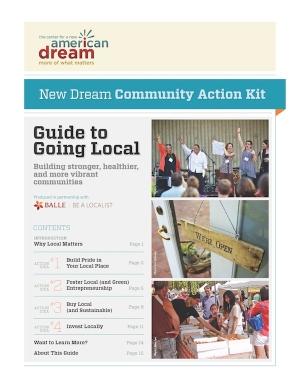
This new guide offers ideas and advice on how to strengthen the local economy in your town through buying local, highlighting new entrepreneurs, investing locally, and more. With how-to tips, videos, and other useful resources, the Guide to Going Local provides tools in four key areas: building pride in place, fostering local entrepreneurship, buying locally and sustainably, and investing locally.
This collection of essays, drawn from excerpts in Commons Magazine, is intended to improve our understanding of the “commons” and “placemaking” movements that aim to restore a sense of place in communities, while promoting public space and engagement. Focusing on community assets, these movements promote an integrated approach to urban planning that seeks to create public spaces that promote people’s health, happiness, and well-being. The collection includes best practice examples — ranging from Bogata, Colombia to the Netherlands to Boston — of strategies for building community and reclaiming public and open space.
This Lincoln Institute of Land Policy study, entitled Regenerating America’s Legacy Cities, examines new strategies for rebuilding and reinventing the economies of older industrial cities that have experienced dramatic job and population decreases over the last few decades. Authors Alan Mallach and Lavea Brachman detail how these “legacy cities” can employ land-use planning tools that reflect the changing economy and social fabric to support new forms of economic development.